Buy microliving.eu ?
We are moving the project
microliving.eu .
Are you interested in purchasing the domain
microliving.eu ?
domain@kv-gmbh.de · 0541-91531010
Buy microliving.eu ?
What is the derivation of the variance decomposition of the variance?
The variance decomposition of the variance is derived from the decomposition of the total variance into its components. This decomposition helps to understand the relative contributions of different sources of variation to the total variance. By partitioning the variance into its constituent parts, such as the variance due to different factors or sources, we can quantify the amount of variability explained by each component. This decomposition is commonly used in statistical analysis to assess the importance of various factors in explaining the overall variability in a dataset. **
What is the asymptotic variance?
The asymptotic variance is a measure of the variability of an estimator as the sample size approaches infinity. It represents the limit of the variance of the estimator as the sample size becomes very large. In statistical theory, it is used to assess the precision and reliability of an estimator in the long run. A smaller asymptotic variance indicates that the estimator is more efficient and provides more precise estimates as the sample size increases. **


Similar search terms for Variance
Top-Angebote
Products related to Variance:
-
Perfect Picks Market Space Saving Closet Organizer With Clips Hangs Pairs Of Leggings, Efficient Black Hanger pinkSay goodbye to clutter and hello to a wellorganized closet with our spacesaving closet organizer. Perfect for anyone struggling with limited closet space, this hanging organizer holds up to 40 pairs of leggings, making it easy to find your favorites...33,97 $*Shipping: 0,00 $Secure redirect to the provider
-
FUFU&GAGA Modern Minimalist Lockable Laundry Room Storage Cabinet with 8 Shelves,Tall Space-Saving DesignTurn a crowded laundry area into a more organized, efficient, and easier-to-manage part of the home with a cabinet that gives everyday essentials a visible place, keeps backup supplies neatly contained, and helps you use vertical space instead of...208,99 $*Shipping: 0,00 $Secure redirect to the provider
-
Value Selection Ajax Steel Ladder Bookcase Space Saving Modern Vertical Bookshelf Ajax Steel Ladder Bookcase Space Saving Modern Vertical BookshelfBring comfort and convenience to every page. This natural bamboo book stand keeps cookbooks, textbooks, sheet music, and tablets comfortably positioned for handsfree use. Its five adjustable viewing angles make reading, studying, cooking, or...509,97 $*Shipping: 0,00 $Secure redirect to the provider
-
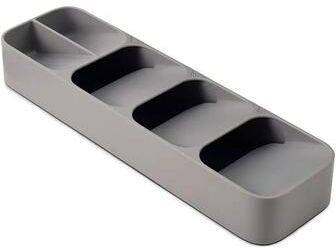
Uplift Essentials Compact Space Saving Cutlery Organizer Multi Compartment Kitchen Drawer Sorting Tray greyOpening a cluttered kitchen drawer only to be greeted by a tangled, chaotic jumble of loose forks, rolling knives, and buried spoons can bring your meal preparation to an immediate halt. Traditional flat sorting trays slide around easily, scratch...61,97 $*Shipping: 0,00 $Secure redirect to the provider


-
What is variance in mathematics?
In mathematics, variance is a measure of how much a set of numbers varies or spreads out. It is a statistical measure that indicates the extent to which data points differ from the mean (average) of the set. A high variance means that the numbers in the set are spread out over a wider range, while a low variance means that the numbers are closer to the mean. Variance is calculated by taking the average of the squared differences between each data point and the mean. **
-
What is the difference between variance and standard deviation, and why is variance needed?
Variance and standard deviation are both measures of the spread or dispersion of a set of data. The main difference between the two is that variance is the average of the squared differences from the mean, while standard deviation is the square root of the variance. Standard deviation is often preferred over variance because it is in the same units as the original data, making it easier to interpret. However, variance is still needed in statistical calculations, such as in the calculation of the standard deviation, and it provides valuable information about the variability of the data. **
-
How do you calculate variance correctly?
Variance is calculated by finding the average of the squared differences between each data point and the mean of the data set. First, calculate the mean of the data set. Then, subtract the mean from each data point, square the result, and find the average of these squared differences. This average is the variance. The formula for variance is: variance = Σ (x - μ)² / n, where Σ represents the sum of the squared differences, x is each data point, μ is the mean, and n is the number of data points. **
-
How can the variance be transformed?
The variance can be transformed by applying a linear transformation to the data. This can involve multiplying each data point by a constant, adding a constant to each data point, or a combination of both. Another way to transform the variance is by applying a non-linear transformation to the data, such as taking the square root or the logarithm of the data. These transformations can help to stabilize the variance, make the data more normally distributed, or make the variance more homogeneous across different groups or levels of a factor. **

What is variance explanation in psychology?
Variance explanation in psychology refers to the extent to which a particular variable or set of variables can account for the variability in a certain psychological phenomenon or behavior. It is a measure of how much of the variability in a particular outcome can be attributed to the variables being studied. For example, in a study on the factors influencing depression, variance explanation would indicate how much of the variability in depression scores can be explained by factors such as genetics, environment, or personality traits. Understanding the variance explanation in psychology is important for identifying the key factors that contribute to a particular psychological outcome. **
What does variance stand for in statistics?
In statistics, variance is a measure of how spread out a set of data points are from the mean. It quantifies the variability or dispersion of a dataset. A high variance indicates that the data points are spread out widely, while a low variance indicates that the data points are clustered closely around the mean. Variance is calculated by taking the average of the squared differences between each data point and the mean. **
Top-Angebote
Products related to Variance:
-
Modern Minimalist Tilt-Out Shoe Cabinet with Heavy Duty Frame and Space-Saving Design(1)Heavy-Duty Steel Frame ConstructionEngineered with premium cold-rolled steel metal framework, this shoestorage cabinet delivers exceptional stability and superior weightcapacity.167,49 $*Shipping: 0,00 $Secure redirect to the provider
-
Perfect Picks Market Space Saving Closet Organizer With Clips Hangs Pairs Of Leggings, Efficient Black Hanger pinkSay goodbye to clutter and hello to a wellorganized closet with our spacesaving closet organizer. Perfect for anyone struggling with limited closet space, this hanging organizer holds up to 40 pairs of leggings, making it easy to find your favorites...33,97 $*Shipping: 0,00 $Secure redirect to the provider
-
FUFU&GAGA Modern Minimalist Lockable Laundry Room Storage Cabinet with 8 Shelves,Tall Space-Saving DesignTurn a crowded laundry area into a more organized, efficient, and easier-to-manage part of the home with a cabinet that gives everyday essentials a visible place, keeps backup supplies neatly contained, and helps you use vertical space instead of...208,99 $*Shipping: 0,00 $Secure redirect to the provider
-
What is the derivation of the variance decomposition of the variance?
The variance decomposition of the variance is derived from the decomposition of the total variance into its components. This decomposition helps to understand the relative contributions of different sources of variation to the total variance. By partitioning the variance into its constituent parts, such as the variance due to different factors or sources, we can quantify the amount of variability explained by each component. This decomposition is commonly used in statistical analysis to assess the importance of various factors in explaining the overall variability in a dataset. **
-
What is the asymptotic variance?
The asymptotic variance is a measure of the variability of an estimator as the sample size approaches infinity. It represents the limit of the variance of the estimator as the sample size becomes very large. In statistical theory, it is used to assess the precision and reliability of an estimator in the long run. A smaller asymptotic variance indicates that the estimator is more efficient and provides more precise estimates as the sample size increases. **
-
What is variance in mathematics?
In mathematics, variance is a measure of how much a set of numbers varies or spreads out. It is a statistical measure that indicates the extent to which data points differ from the mean (average) of the set. A high variance means that the numbers in the set are spread out over a wider range, while a low variance means that the numbers are closer to the mean. Variance is calculated by taking the average of the squared differences between each data point and the mean. **
-
What is the difference between variance and standard deviation, and why is variance needed?
Variance and standard deviation are both measures of the spread or dispersion of a set of data. The main difference between the two is that variance is the average of the squared differences from the mean, while standard deviation is the square root of the variance. Standard deviation is often preferred over variance because it is in the same units as the original data, making it easier to interpret. However, variance is still needed in statistical calculations, such as in the calculation of the standard deviation, and it provides valuable information about the variability of the data. **
Similar search terms for Variance
-
Value Selection Ajax Steel Ladder Bookcase Space Saving Modern Vertical Bookshelf Ajax Steel Ladder Bookcase Space Saving Modern Vertical BookshelfBring comfort and convenience to every page. This natural bamboo book stand keeps cookbooks, textbooks, sheet music, and tablets comfortably positioned for handsfree use. Its five adjustable viewing angles make reading, studying, cooking, or...509,97 $*Shipping: 0,00 $Secure redirect to the provider
-
Uplift Essentials Compact Space Saving Cutlery Organizer Multi Compartment Kitchen Drawer Sorting Tray greyOpening a cluttered kitchen drawer only to be greeted by a tangled, chaotic jumble of loose forks, rolling knives, and buried spoons can bring your meal preparation to an immediate halt. Traditional flat sorting trays slide around easily, scratch...61,97 $*Shipping: 0,00 $Secure redirect to the provider
-
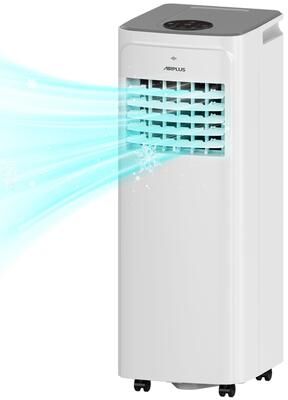
/ Portable Air Conditioner, Compact Space-Saving Design for Bedrooms, Apartments, Offices & Dorm Rooms,Cooling Only.Stay cool and comfortable wherever you need it with this portable air conditioner, designed to deliver efficient cooling, convenient mobility, and user-friendly operation for modern living spaces.385,49 $*Shipping: 0,00 $Secure redirect to the provider
-
Modern Minimalist Tilt-Out Shoe Cabinet with Heavy Duty Frame and Space-Saving Design(1)Heavy-Duty Steel Frame ConstructionEngineered with premium cold-rolled steel metal framework, this shoestorage cabinet delivers exceptional stability and superior weightcapacity.167,49 $*Shipping: 0,00 $Secure redirect to the provider
-
How do you calculate variance correctly?
Variance is calculated by finding the average of the squared differences between each data point and the mean of the data set. First, calculate the mean of the data set. Then, subtract the mean from each data point, square the result, and find the average of these squared differences. This average is the variance. The formula for variance is: variance = Σ (x - μ)² / n, where Σ represents the sum of the squared differences, x is each data point, μ is the mean, and n is the number of data points. **
-
How can the variance be transformed?
The variance can be transformed by applying a linear transformation to the data. This can involve multiplying each data point by a constant, adding a constant to each data point, or a combination of both. Another way to transform the variance is by applying a non-linear transformation to the data, such as taking the square root or the logarithm of the data. These transformations can help to stabilize the variance, make the data more normally distributed, or make the variance more homogeneous across different groups or levels of a factor. **
-
What is variance explanation in psychology?
Variance explanation in psychology refers to the extent to which a particular variable or set of variables can account for the variability in a certain psychological phenomenon or behavior. It is a measure of how much of the variability in a particular outcome can be attributed to the variables being studied. For example, in a study on the factors influencing depression, variance explanation would indicate how much of the variability in depression scores can be explained by factors such as genetics, environment, or personality traits. Understanding the variance explanation in psychology is important for identifying the key factors that contribute to a particular psychological outcome. **
-
What does variance stand for in statistics?
In statistics, variance is a measure of how spread out a set of data points are from the mean. It quantifies the variability or dispersion of a dataset. A high variance indicates that the data points are spread out widely, while a low variance indicates that the data points are clustered closely around the mean. Variance is calculated by taking the average of the squared differences between each data point and the mean. **
* All prices are inclusive of VAT and, if applicable, plus shipping costs. The offer information is based on the details provided by the respective shop and is updated through automated processes. Real-time updates do not occur, so deviations can occur in individual cases. ** Note: Parts of this content were created by AI.