Buy microliving.eu ?
We are moving the project
microliving.eu .
Are you interested in purchasing the domain
microliving.eu ?
domain@kv-gmbh.de · 0541-91531010
Buy microliving.eu ?
Why are modern DNA sequencing methods faster?
Modern DNA sequencing methods are faster due to advancements in technology and automation. High-throughput sequencing machines can process multiple samples simultaneously, increasing the speed of data generation. Additionally, improvements in chemistry and bioinformatics have streamlined the sequencing process, reducing the time and resources required for analysis. These advancements have made it possible to sequence large genomes in a fraction of the time it would have taken with older methods, revolutionizing the field of genomics. **
What are the differences between Sanger DNA sequencing and NGS sequencing using a sequencer?
Sanger DNA sequencing is a traditional method that involves sequencing one DNA fragment at a time using chain-terminating dideoxynucleotides. It is a slower and more labor-intensive process compared to NGS sequencing. NGS sequencing, on the other hand, uses massively parallel sequencing technology to simultaneously sequence millions of DNA fragments. This allows for high-throughput sequencing and the generation of large amounts of data in a shorter amount of time. Additionally, NGS sequencing can provide more comprehensive and detailed information about the entire genome, making it more suitable for large-scale genomic studies. **


Similar search terms for Numberblocks-Sequencing-Puzzle-by
Top-Angebote
Products related to Numberblocks-Sequencing-Puzzle-by:
-
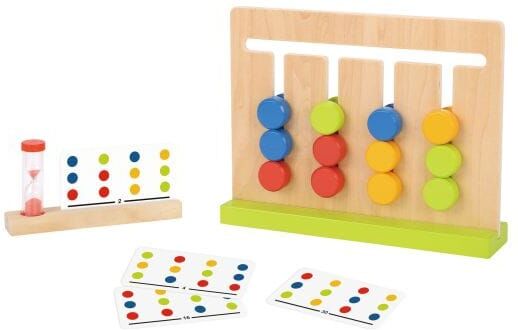
Tooky Toys Wooden Logic Game - Children's Sequencing and Spatial Reasoning Puzzle for Ages 6+Solid wood logic game for children ages 6 and older. Develops sequencing, spatial reasoning, and sustained attention. No screens required. Smooth edges and compact design for easy transport and storage.8,13 £*Shipping: 3,95 £Secure redirect to the provider
-
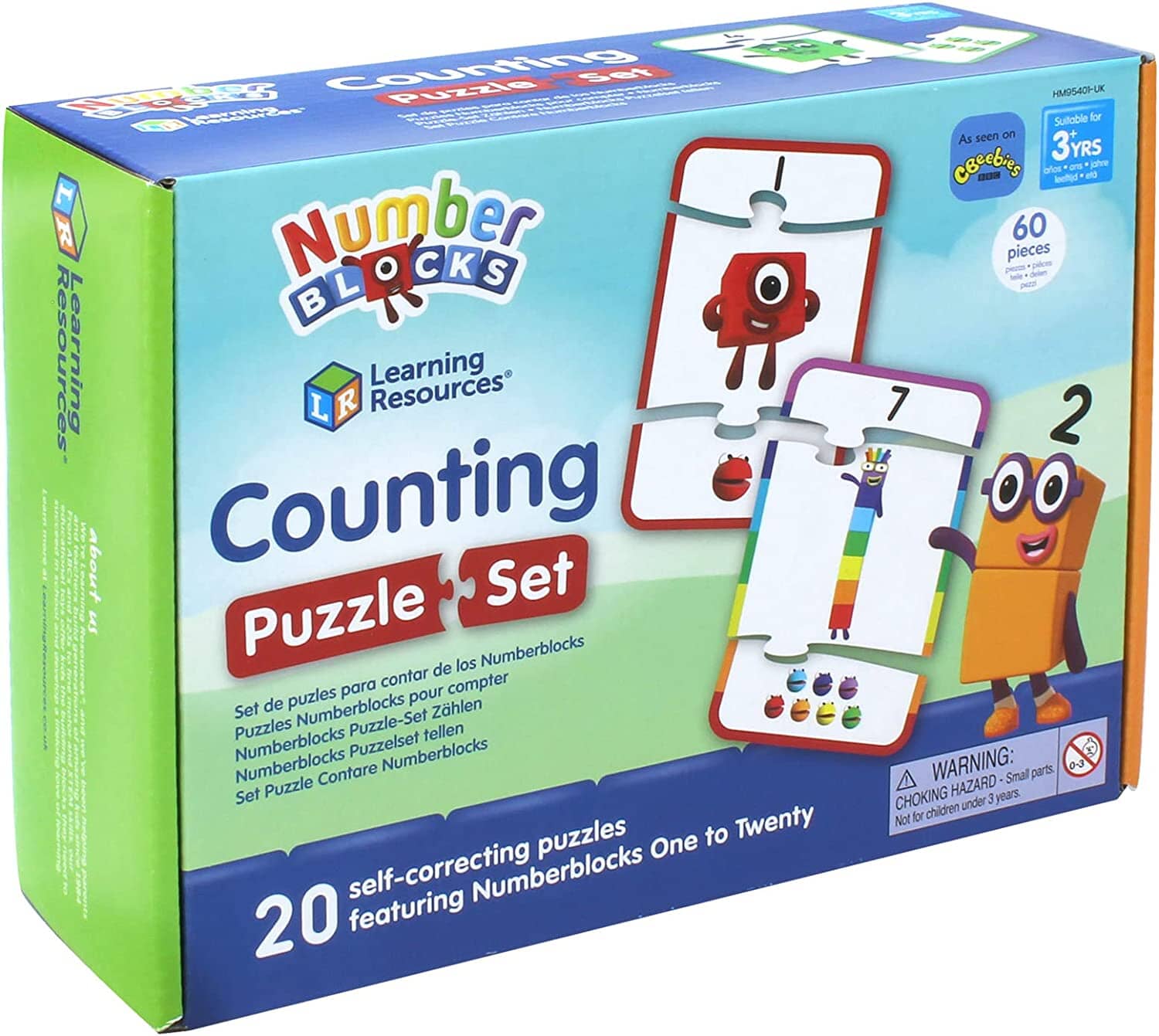
Numberblocks Counting Puzzle Set by Learning Resources - Ages 3 Years+ Learning ResourcesNUMBERBLOCKS AS SEEN ON TV: Learn to count from 1–20 with the friendly Numberblocks! These Numberblocks jigsaw puzzles are based on the friendly characters children know and love from the award-winning TV series. COUNT FROM 1–20: Make learning to count fun! As children complete the 20 counting puzzles, they’ll be counting the Numberblocks and Numberblobs, identifying each Numberblock’s Numberling, as well as building colour recognition and fine motor skills. MATCH NUMBERS & PICTURES: Match the Numberblock to its Numberling, and then see if you can match the puzzle piece with the correct number of Numberblobs to complete the puzzle. SELF-CORRECTING PUZZLES: Each of these clever self-correcting Numberblocks counting puzzles fits together in a unique way, so there’s only one right answer. INCLUDES: 20 x 3-piece puzzles. The chunky pieces are made from durable card and are easy for little hands to hold. Pieces store in the reusable packaging after play. Completed puzzles measure 15cm L x 10cm W.16,99 £*Shipping: 2,99 £Secure redirect to the provider
-
Learning Resources Numberblocks Puzzle Solver - 42-piece set for Ages 3+Challenge young minds with the Learning Resources Numberblocks Puzzle Solver. Inspired by favorite Numberblocks episodes, this engaging puzzle set encourages children to turn, flip, and fit pieces together to solve 50 exciting puzzles featuring Numberblocks One to Five. With four levels of difficulty, the game grows with your child, boosting critical thinking and spatial reasoning skills. Perfect for solo play or with friends, this puzzle set includes 25 double-sided challenge cards and 16 character puzzle pieces, all stored in a convenient case for easy on-the-go fun. Suitable for children aged 3 and above, this game is a great way to bring learning and play together.12,81 £*Shipping: 3,95 £Secure redirect to the provider
-
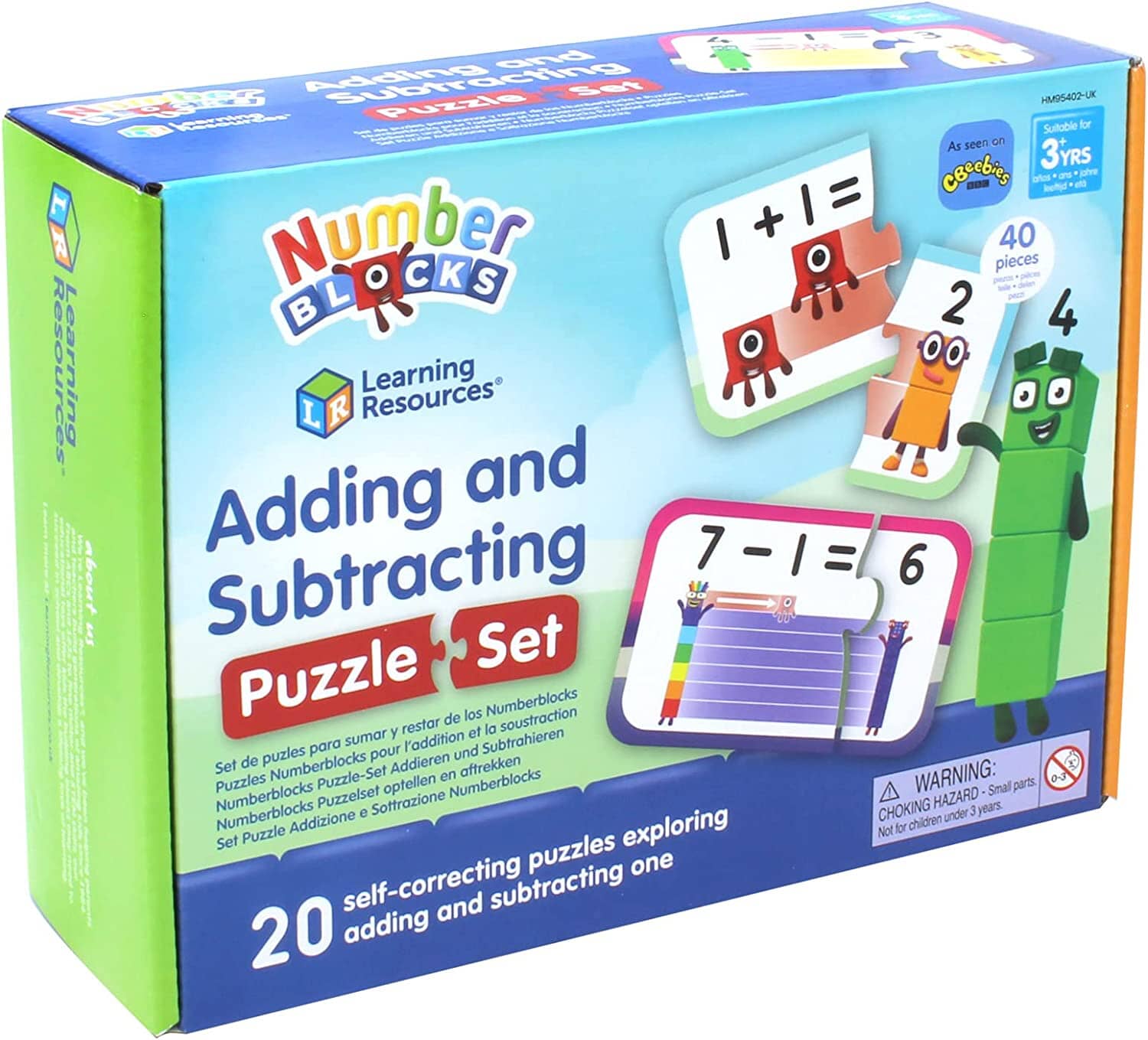
Numberblocks Adding and Subtracting Puzzle Set by Learning Resources - Ages 3 Years+ Learning ResourcesNUMBERBLOCKS AS SEEN ON TV: Discover what happens when you add or subtract 1 with these simple 2-piece Numberblocks jigsaw puzzles based on the award-winning TV series. ADD & SUBTRACT: Make learning simple addition and subtraction fun for young children! As children complete the 20 colourful puzzles, they’ll be building basic maths skills along with colour recognition and fine motor skills. MATCH NUMBERS & PICTURES: See the addition or subtraction question, count the Numberblocks on the puzzle piece, and then find the correct answer piece. SELF-CORRECTING PUZZLES: Each of these clever self-correcting Numberblocks counting puzzles fits together in a unique way, so there’s only one right answer. INCLUDES: 20 x 2-piece puzzles. The chunky pieces are made from durable card and are easy for little hands to hold. Pieces store in the reusable packaging after play. Completed puzzles measure 15cm L x 10cm W.15,99 £*Shipping: 2,99 £Secure redirect to the provider

-
What is the DNA sequencing for guanine?
The DNA sequencing for guanine is represented by the letter "G". Guanine is one of the four nucleobases found in DNA, along with adenine, cytosine, and thymine. It pairs with cytosine through three hydrogen bonds in the DNA double helix structure. The specific sequence of guanine, along with the other nucleobases, forms the genetic code that determines the characteristics and functions of an organism. **
-
What is your puzzle puzzle puzzle question?
My puzzle puzzle puzzle question is: Can you solve a Rubik's Cube in under 2 minutes? This question challenges individuals to use their problem-solving skills and spatial reasoning to manipulate the colors on the cube and align them into a solved state within a specific time frame. It also encourages competition and fosters a sense of achievement when the puzzle is successfully completed within the given time limit. **
-
How can one make a puzzle by themselves?
To create a puzzle, one can start by deciding on the type of puzzle they want to make, such as a crossword, Sudoku, or a jigsaw puzzle. Next, they can come up with a theme or concept for the puzzle and create the puzzle grid or layout. Then, they can populate the puzzle with clues, numbers, or pieces that fit the theme. Finally, they can test the puzzle to ensure it is challenging but solvable before sharing it with others to enjoy. **
-
What is the difference between sequencing and transposition?
Sequencing is the process of determining the precise order of nucleotides in a DNA or RNA molecule. It involves identifying the sequence of bases (A, T, C, G) in a specific region of genetic material. Transposition, on the other hand, is a genetic process where a segment of DNA moves from one location in the genome to another. This can result in genetic mutations or changes in the expression of certain genes. In summary, sequencing involves determining the order of nucleotides, while transposition involves the movement of genetic material within the genome. **

What is the difference between these two sequencing methods?
The difference between Sanger sequencing and next-generation sequencing (NGS) lies in their technology and throughput. Sanger sequencing, also known as first-generation sequencing, is a traditional method that uses chain-terminating dideoxynucleotides to sequence DNA. It is a slower and more labor-intensive process, typically used for sequencing shorter DNA fragments. On the other hand, NGS is a high-throughput method that sequences millions of DNA fragments in parallel, allowing for faster and more cost-effective sequencing of entire genomes or targeted regions. NGS also provides greater depth of coverage and can detect rare genetic variants more effectively than Sanger sequencing. **
My friend believes he can solve every puzzle by himself.
It's great that your friend is confident in his abilities to solve puzzles independently. However, it's important to remember that sometimes puzzles can be challenging and it's okay to ask for help or collaborate with others to find a solution. Encourage your friend to continue honing his problem-solving skills while also being open to different perspectives and approaches. **
Top-Angebote
Products related to Numberblocks-Sequencing-Puzzle-by:
-
Learning Resources Numberblocks Sequencing Puzzle for Ages 3+ - Numberblocks 1-20 Double Sided Puzzle SetHelps children master number sequencing with friendly Numberblocks from One to Twenty. Includes 10 pieces with double-sided puzzles, color-coded pieces, and a number line for ordering and comparing numbers. Suitable for ages 3 and up.9,66 £*Shipping: 3,95 £Secure redirect to the provider
-
Numberblocks Sequencing Puzzle by Learning Resources - Ages 3 Years+ - Educational Toy Learning ResourcesNUMBERBLOCKS AS SEEN ON TV: Help children learn to sequence the numbers 1–20 in the correct order with their friends Numberblocks One to Twenty from the hit TV series. LEARN TO COUNT 1–20: Make learning to count 1–20 in the correct order fun for young children! As children complete the 20 colourful puzzles, they’ll be building basic maths skills along with colour recognition and fine motor skills. MATCH NUMBERS & PICTURES: Start with the 1-5 Numberblocks sequencing puzzles – can you put your friends One, Two, Three, Four, and Five in the correct order? As children learn and grow, progress to the next puzzle. PERFECT FOR LEARNING: Each of these Numberblocks maths puzzles is colour-coded for easy set-up. Each puzzle also has a number line, a teaching tool to help children sequence numbers and use to solve simple maths problems. INCLUDES: 10 double-sided puzzles - 4 each of puzzles for 1–5 (13cm L x 15cm W) and 1–10 (26cm L x 15cm W) and 2 for numbers 1–20 (51cm L x 15cm W).14,99 £*Shipping: 2,99 £Secure redirect to the provider
-
Tooky Toys Wooden Logic Game - Children's Sequencing and Spatial Reasoning Puzzle for Ages 6+Solid wood logic game for children ages 6 and older. Develops sequencing, spatial reasoning, and sustained attention. No screens required. Smooth edges and compact design for easy transport and storage.8,13 £*Shipping: 3,95 £Secure redirect to the provider
-
Numberblocks Counting Puzzle Set by Learning Resources - Ages 3 Years+ Learning ResourcesNUMBERBLOCKS AS SEEN ON TV: Learn to count from 1–20 with the friendly Numberblocks! These Numberblocks jigsaw puzzles are based on the friendly characters children know and love from the award-winning TV series. COUNT FROM 1–20: Make learning to count fun! As children complete the 20 counting puzzles, they’ll be counting the Numberblocks and Numberblobs, identifying each Numberblock’s Numberling, as well as building colour recognition and fine motor skills. MATCH NUMBERS & PICTURES: Match the Numberblock to its Numberling, and then see if you can match the puzzle piece with the correct number of Numberblobs to complete the puzzle. SELF-CORRECTING PUZZLES: Each of these clever self-correcting Numberblocks counting puzzles fits together in a unique way, so there’s only one right answer. INCLUDES: 20 x 3-piece puzzles. The chunky pieces are made from durable card and are easy for little hands to hold. Pieces store in the reusable packaging after play. Completed puzzles measure 15cm L x 10cm W.16,99 £*Shipping: 2,99 £Secure redirect to the provider
-
Why are modern DNA sequencing methods faster?
Modern DNA sequencing methods are faster due to advancements in technology and automation. High-throughput sequencing machines can process multiple samples simultaneously, increasing the speed of data generation. Additionally, improvements in chemistry and bioinformatics have streamlined the sequencing process, reducing the time and resources required for analysis. These advancements have made it possible to sequence large genomes in a fraction of the time it would have taken with older methods, revolutionizing the field of genomics. **
-
What are the differences between Sanger DNA sequencing and NGS sequencing using a sequencer?
Sanger DNA sequencing is a traditional method that involves sequencing one DNA fragment at a time using chain-terminating dideoxynucleotides. It is a slower and more labor-intensive process compared to NGS sequencing. NGS sequencing, on the other hand, uses massively parallel sequencing technology to simultaneously sequence millions of DNA fragments. This allows for high-throughput sequencing and the generation of large amounts of data in a shorter amount of time. Additionally, NGS sequencing can provide more comprehensive and detailed information about the entire genome, making it more suitable for large-scale genomic studies. **
-
What is the DNA sequencing for guanine?
The DNA sequencing for guanine is represented by the letter "G". Guanine is one of the four nucleobases found in DNA, along with adenine, cytosine, and thymine. It pairs with cytosine through three hydrogen bonds in the DNA double helix structure. The specific sequence of guanine, along with the other nucleobases, forms the genetic code that determines the characteristics and functions of an organism. **
-
What is your puzzle puzzle puzzle question?
My puzzle puzzle puzzle question is: Can you solve a Rubik's Cube in under 2 minutes? This question challenges individuals to use their problem-solving skills and spatial reasoning to manipulate the colors on the cube and align them into a solved state within a specific time frame. It also encourages competition and fosters a sense of achievement when the puzzle is successfully completed within the given time limit. **
Similar search terms for Numberblocks-Sequencing-Puzzle-by
-
Learning Resources Numberblocks Puzzle Solver - 42-piece set for Ages 3+Challenge young minds with the Learning Resources Numberblocks Puzzle Solver. Inspired by favorite Numberblocks episodes, this engaging puzzle set encourages children to turn, flip, and fit pieces together to solve 50 exciting puzzles featuring Numberblocks One to Five. With four levels of difficulty, the game grows with your child, boosting critical thinking and spatial reasoning skills. Perfect for solo play or with friends, this puzzle set includes 25 double-sided challenge cards and 16 character puzzle pieces, all stored in a convenient case for easy on-the-go fun. Suitable for children aged 3 and above, this game is a great way to bring learning and play together.12,81 £*Shipping: 3,95 £Secure redirect to the provider
-
Numberblocks Adding and Subtracting Puzzle Set by Learning Resources - Ages 3 Years+ Learning ResourcesNUMBERBLOCKS AS SEEN ON TV: Discover what happens when you add or subtract 1 with these simple 2-piece Numberblocks jigsaw puzzles based on the award-winning TV series. ADD & SUBTRACT: Make learning simple addition and subtraction fun for young children! As children complete the 20 colourful puzzles, they’ll be building basic maths skills along with colour recognition and fine motor skills. MATCH NUMBERS & PICTURES: See the addition or subtraction question, count the Numberblocks on the puzzle piece, and then find the correct answer piece. SELF-CORRECTING PUZZLES: Each of these clever self-correcting Numberblocks counting puzzles fits together in a unique way, so there’s only one right answer. INCLUDES: 20 x 2-piece puzzles. The chunky pieces are made from durable card and are easy for little hands to hold. Pieces store in the reusable packaging after play. Completed puzzles measure 15cm L x 10cm W.15,99 £*Shipping: 2,99 £Secure redirect to the provider
-
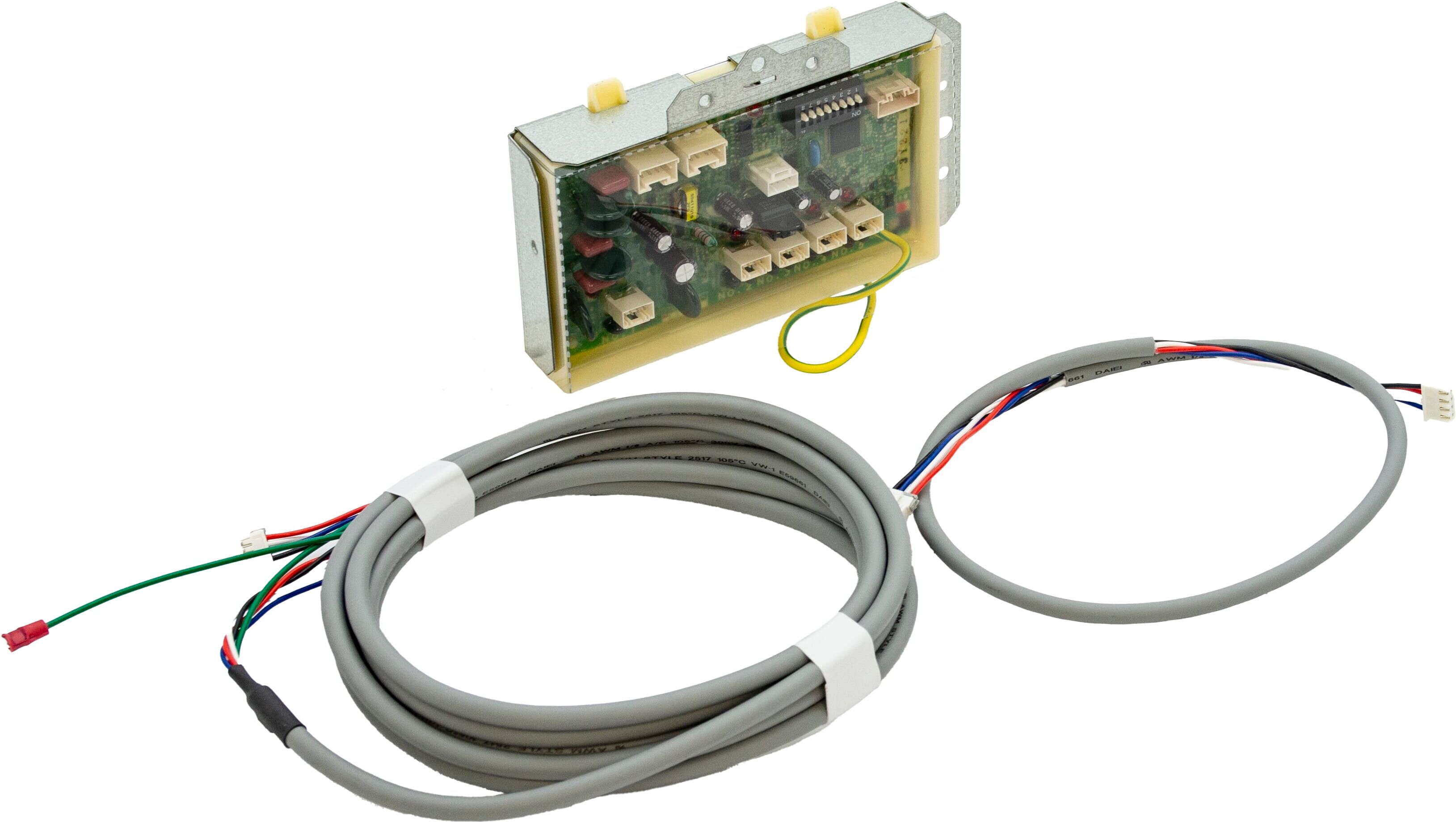
Rinnai MECS Electronic Sequencing System (Master + 1 Slave)Electronic Sequencing manifold for use with the Internal Rinnai Gas Water Heaters. The electronic control system can link each heater, turning each one on as required. The system automatically evens out the work load between units to minimise wear and tear.60,90 £*Shipping: 5,00 £Secure redirect to the provider
-
Learning Resources Numberblocks Counting Puzzle Set - Counting from 1 to 20 - Multicolour - 7.5 x 22 x 16.5 cmMake counting fun and rewarding with the Learning Resources Numberblocks Counting Puzzle Set. This colorful, hands-on puzzle helps little ones learn to count from 1 to 20 with their favorite Numberblocks and Numberblobs. As children assemble each puzzle piece, they practice number recognition, color matching, and fine motor skills. Each piece is self-correcting, so there’s only one way to complete each puzzle, giving kids a sense of achievement and confidence as they match numbers correctly. Perfect for early learners, this durable puzzle set brings learning to life with the engaging characters from the Numberblocks series. Suitable for children aged 3 and above, this puzzle measures 7.5 x 22 x 16.5 cm.10,49 £*Shipping: 3,95 £Secure redirect to the provider
-
How can one make a puzzle by themselves?
To create a puzzle, one can start by deciding on the type of puzzle they want to make, such as a crossword, Sudoku, or a jigsaw puzzle. Next, they can come up with a theme or concept for the puzzle and create the puzzle grid or layout. Then, they can populate the puzzle with clues, numbers, or pieces that fit the theme. Finally, they can test the puzzle to ensure it is challenging but solvable before sharing it with others to enjoy. **
-
What is the difference between sequencing and transposition?
Sequencing is the process of determining the precise order of nucleotides in a DNA or RNA molecule. It involves identifying the sequence of bases (A, T, C, G) in a specific region of genetic material. Transposition, on the other hand, is a genetic process where a segment of DNA moves from one location in the genome to another. This can result in genetic mutations or changes in the expression of certain genes. In summary, sequencing involves determining the order of nucleotides, while transposition involves the movement of genetic material within the genome. **
-
What is the difference between these two sequencing methods?
The difference between Sanger sequencing and next-generation sequencing (NGS) lies in their technology and throughput. Sanger sequencing, also known as first-generation sequencing, is a traditional method that uses chain-terminating dideoxynucleotides to sequence DNA. It is a slower and more labor-intensive process, typically used for sequencing shorter DNA fragments. On the other hand, NGS is a high-throughput method that sequences millions of DNA fragments in parallel, allowing for faster and more cost-effective sequencing of entire genomes or targeted regions. NGS also provides greater depth of coverage and can detect rare genetic variants more effectively than Sanger sequencing. **
-
My friend believes he can solve every puzzle by himself.
It's great that your friend is confident in his abilities to solve puzzles independently. However, it's important to remember that sometimes puzzles can be challenging and it's okay to ask for help or collaborate with others to find a solution. Encourage your friend to continue honing his problem-solving skills while also being open to different perspectives and approaches. **
* All prices are inclusive of VAT and, if applicable, plus shipping costs. The offer information is based on the details provided by the respective shop and is updated through automated processes. Real-time updates do not occur, so deviations can occur in individual cases. ** Note: Parts of this content were created by AI.