Buy microliving.eu ?
We are moving the project
microliving.eu .
Are you interested in purchasing the domain
microliving.eu ?
domain@kv-gmbh.de · 0541-91531010
Buy microliving.eu ?
What is the biserial correlation coefficient and the phi coefficient and the chi coefficient?
The biserial correlation coefficient is a measure of the strength and direction of the relationship between a continuous variable and a dichotomous variable. It is calculated when one variable is continuous and the other is dichotomous. The phi coefficient is a measure of association between two dichotomous variables. It is calculated using a 2x2 contingency table and ranges from -1 to 1, with 0 indicating no association and 1 indicating a perfect association. The chi coefficient is a measure of association between two dichotomous variables, similar to the phi coefficient. It is also calculated using a 2x2 contingency table and ranges from -1 to 1, with 0 indicating no association and 1 indicating a perfect association. **
Which correlation coefficient?
The correlation coefficient is a statistical measure that quantifies the strength and direction of a relationship between two variables. It ranges from -1 to 1, with -1 indicating a perfect negative correlation, 0 indicating no correlation, and 1 indicating a perfect positive correlation. The correlation coefficient is used to determine how closely the two variables are related and can help in making predictions or understanding the nature of the relationship between them. **


Similar search terms for Coefficient
Top-Angebote
Products related to Coefficient:
-
FUFU&GAGA Modern Minimalist Lockable Laundry Room Storage Cabinet with 8 Shelves,Tall Space-Saving DesignTurn a crowded laundry area into a more organized, efficient, and easier-to-manage part of the home with a cabinet that gives everyday essentials a visible place, keeps backup supplies neatly contained, and helps you use vertical space instead of...208,99 $*Shipping: 0,00 $Secure redirect to the provider
-
Perfect Picks Market Space Saving Closet Organizer With Clips Hangs Pairs Of Leggings, Efficient Black Hanger pinkSay goodbye to clutter and hello to a wellorganized closet with our spacesaving closet organizer. Perfect for anyone struggling with limited closet space, this hanging organizer holds up to 40 pairs of leggings, making it easy to find your favorites...33,97 $*Shipping: 0,00 $Secure redirect to the provider
-
Value Selection Ajax Steel Ladder Bookcase Space Saving Modern Vertical Bookshelf Ajax Steel Ladder Bookcase Space Saving Modern Vertical BookshelfBring comfort and convenience to every page. This natural bamboo book stand keeps cookbooks, textbooks, sheet music, and tablets comfortably positioned for handsfree use. Its five adjustable viewing angles make reading, studying, cooking, or...509,97 $*Shipping: 0,00 $Secure redirect to the provider
-
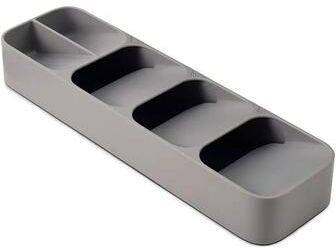
Uplift Essentials Compact Space Saving Cutlery Organizer Multi Compartment Kitchen Drawer Sorting Tray greyOpening a cluttered kitchen drawer only to be greeted by a tangled, chaotic jumble of loose forks, rolling knives, and buried spoons can bring your meal preparation to an immediate halt. Traditional flat sorting trays slide around easily, scratch...61,97 $*Shipping: 0,00 $Secure redirect to the provider


-
What is the binomial coefficient?
The binomial coefficient, denoted as ${n \choose k}$, represents the number of ways to choose k elements from a set of n elements without regard to the order of selection. It is calculated using the formula ${n \choose k} = \frac{n!}{k!(n-k)!}$, where n! denotes the factorial of n. The binomial coefficient is commonly used in combinatorics and probability theory to calculate the number of combinations or possibilities in a given scenario. **
-
What is the Lusor coefficient?
The Lusor coefficient is a measure of the ability of a fluid to carry sediment. It is used in the field of sediment transport to quantify the sediment-carrying capacity of a fluid, such as water or air. The coefficient takes into account factors such as the size and density of the sediment particles, as well as the velocity and viscosity of the fluid. A higher Lusor coefficient indicates a greater ability of the fluid to transport sediment. **
-
What is the validity coefficient?
The validity coefficient is a statistical measure that quantifies the relationship between a predictor (such as a test or assessment) and a criterion (such as job performance or academic achievement). It indicates the degree to which the predictor is able to accurately predict the criterion. A higher validity coefficient suggests a stronger relationship between the predictor and the criterion, indicating that the predictor is more effective in predicting the criterion. Validity coefficients are commonly used in the field of psychometrics and are important for evaluating the effectiveness of selection tools and assessments. **
-
What is a Gini coefficient?
A Gini coefficient is a measure of income inequality within a population. It is calculated based on the distribution of income or wealth among individuals or households in a given country or region. The coefficient ranges from 0 to 1, with 0 representing perfect equality (everyone has the same income) and 1 representing perfect inequality (one person has all the income). A higher Gini coefficient indicates greater income inequality, while a lower coefficient indicates more equal distribution of income. **


What is the multiplication coefficient?
The multiplication coefficient is a number that represents the factor by which a quantity is multiplied. It is used to scale or increase the value of a quantity by a certain amount. For example, if the multiplication coefficient is 2, then the quantity is doubled. The multiplication coefficient is often used in mathematical equations and calculations to represent the relationship between different quantities. **
How to calculate the Gini coefficient?
The Gini coefficient is calculated by dividing the area between the Lorenz curve (which represents the actual distribution of income or wealth) and the line of perfect equality by the total area under the line of perfect equality. This ratio is then subtracted from 1 to get the Gini coefficient. The Gini coefficient ranges from 0 (perfect equality) to 1 (perfect inequality). The formula for calculating the Gini coefficient is: G = (A / (A + B)), where A is the area between the Lorenz curve and the line of perfect equality, and B is the area under the line of perfect equality. **
Top-Angebote
Products related to Coefficient:
-
Modern Minimalist Tilt-Out Shoe Cabinet with Heavy Duty Frame and Space-Saving Design(1)Heavy-Duty Steel Frame ConstructionEngineered with premium cold-rolled steel metal framework, this shoestorage cabinet delivers exceptional stability and superior weightcapacity.167,49 $*Shipping: 0,00 $Secure redirect to the provider
-
FUFU&GAGA Modern Minimalist Lockable Laundry Room Storage Cabinet with 8 Shelves,Tall Space-Saving DesignTurn a crowded laundry area into a more organized, efficient, and easier-to-manage part of the home with a cabinet that gives everyday essentials a visible place, keeps backup supplies neatly contained, and helps you use vertical space instead of...208,99 $*Shipping: 0,00 $Secure redirect to the provider
-
Perfect Picks Market Space Saving Closet Organizer With Clips Hangs Pairs Of Leggings, Efficient Black Hanger pinkSay goodbye to clutter and hello to a wellorganized closet with our spacesaving closet organizer. Perfect for anyone struggling with limited closet space, this hanging organizer holds up to 40 pairs of leggings, making it easy to find your favorites...33,97 $*Shipping: 0,00 $Secure redirect to the provider
-
What is the biserial correlation coefficient and the phi coefficient and the chi coefficient?
The biserial correlation coefficient is a measure of the strength and direction of the relationship between a continuous variable and a dichotomous variable. It is calculated when one variable is continuous and the other is dichotomous. The phi coefficient is a measure of association between two dichotomous variables. It is calculated using a 2x2 contingency table and ranges from -1 to 1, with 0 indicating no association and 1 indicating a perfect association. The chi coefficient is a measure of association between two dichotomous variables, similar to the phi coefficient. It is also calculated using a 2x2 contingency table and ranges from -1 to 1, with 0 indicating no association and 1 indicating a perfect association. **
-
Which correlation coefficient?
The correlation coefficient is a statistical measure that quantifies the strength and direction of a relationship between two variables. It ranges from -1 to 1, with -1 indicating a perfect negative correlation, 0 indicating no correlation, and 1 indicating a perfect positive correlation. The correlation coefficient is used to determine how closely the two variables are related and can help in making predictions or understanding the nature of the relationship between them. **
-
What is the binomial coefficient?
The binomial coefficient, denoted as ${n \choose k}$, represents the number of ways to choose k elements from a set of n elements without regard to the order of selection. It is calculated using the formula ${n \choose k} = \frac{n!}{k!(n-k)!}$, where n! denotes the factorial of n. The binomial coefficient is commonly used in combinatorics and probability theory to calculate the number of combinations or possibilities in a given scenario. **
-
What is the Lusor coefficient?
The Lusor coefficient is a measure of the ability of a fluid to carry sediment. It is used in the field of sediment transport to quantify the sediment-carrying capacity of a fluid, such as water or air. The coefficient takes into account factors such as the size and density of the sediment particles, as well as the velocity and viscosity of the fluid. A higher Lusor coefficient indicates a greater ability of the fluid to transport sediment. **
Similar search terms for Coefficient
-
Value Selection Ajax Steel Ladder Bookcase Space Saving Modern Vertical Bookshelf Ajax Steel Ladder Bookcase Space Saving Modern Vertical BookshelfBring comfort and convenience to every page. This natural bamboo book stand keeps cookbooks, textbooks, sheet music, and tablets comfortably positioned for handsfree use. Its five adjustable viewing angles make reading, studying, cooking, or...509,97 $*Shipping: 0,00 $Secure redirect to the provider
-
Uplift Essentials Compact Space Saving Cutlery Organizer Multi Compartment Kitchen Drawer Sorting Tray greyOpening a cluttered kitchen drawer only to be greeted by a tangled, chaotic jumble of loose forks, rolling knives, and buried spoons can bring your meal preparation to an immediate halt. Traditional flat sorting trays slide around easily, scratch...61,97 $*Shipping: 0,00 $Secure redirect to the provider
-
Space-Saving Modern Shoe Storage Cabinet with Adjustable DrawersFeatures: - Three flip drawers store 12-18 pairs of shoes with a max size of US 11 - Two-level adjustable shelves accommodate various shoe sizes - Tabletop offers extra space for display and storage - Its modern style complements any decor - Its...215,49 $*Shipping: 0,00 $Secure redirect to the provider
-
Modern Minimalist Tilt-Out Shoe Cabinet with Heavy Duty Frame and Space-Saving Design(1)Heavy-Duty Steel Frame ConstructionEngineered with premium cold-rolled steel metal framework, this shoestorage cabinet delivers exceptional stability and superior weightcapacity.167,49 $*Shipping: 0,00 $Secure redirect to the provider
-
What is the validity coefficient?
The validity coefficient is a statistical measure that quantifies the relationship between a predictor (such as a test or assessment) and a criterion (such as job performance or academic achievement). It indicates the degree to which the predictor is able to accurately predict the criterion. A higher validity coefficient suggests a stronger relationship between the predictor and the criterion, indicating that the predictor is more effective in predicting the criterion. Validity coefficients are commonly used in the field of psychometrics and are important for evaluating the effectiveness of selection tools and assessments. **
-
What is a Gini coefficient?
A Gini coefficient is a measure of income inequality within a population. It is calculated based on the distribution of income or wealth among individuals or households in a given country or region. The coefficient ranges from 0 to 1, with 0 representing perfect equality (everyone has the same income) and 1 representing perfect inequality (one person has all the income). A higher Gini coefficient indicates greater income inequality, while a lower coefficient indicates more equal distribution of income. **
-
What is the multiplication coefficient?
The multiplication coefficient is a number that represents the factor by which a quantity is multiplied. It is used to scale or increase the value of a quantity by a certain amount. For example, if the multiplication coefficient is 2, then the quantity is doubled. The multiplication coefficient is often used in mathematical equations and calculations to represent the relationship between different quantities. **
-
How to calculate the Gini coefficient?
The Gini coefficient is calculated by dividing the area between the Lorenz curve (which represents the actual distribution of income or wealth) and the line of perfect equality by the total area under the line of perfect equality. This ratio is then subtracted from 1 to get the Gini coefficient. The Gini coefficient ranges from 0 (perfect equality) to 1 (perfect inequality). The formula for calculating the Gini coefficient is: G = (A / (A + B)), where A is the area between the Lorenz curve and the line of perfect equality, and B is the area under the line of perfect equality. **
* All prices are inclusive of VAT and, if applicable, plus shipping costs. The offer information is based on the details provided by the respective shop and is updated through automated processes. Real-time updates do not occur, so deviations can occur in individual cases. ** Note: Parts of this content were created by AI.