Buy microliving.eu ?
We are moving the project
microliving.eu .
Are you interested in purchasing the domain
microliving.eu ?
domain@kv-gmbh.de · 0541-91531010
Buy microliving.eu ?
What is the vector space of solutions to a homogeneous equation?
The vector space of solutions to a homogeneous equation is the set of all possible solutions to the equation that form a vector space. In other words, it is the set of all vectors that satisfy the equation and also satisfy the properties of a vector space, such as closure under addition and scalar multiplication. The dimension of this vector space is equal to the number of linearly independent solutions to the homogeneous equation. This vector space is important in linear algebra and differential equations, as it provides a framework for understanding the solutions to these types of equations. **
What is the mesh equation and the node equation?
The mesh equation is a fundamental equation used in circuit analysis to calculate the current flowing in a loop of a circuit. It is based on Kirchhoff's voltage law and states that the sum of the voltage drops around a closed loop in a circuit is equal to the product of the current flowing in the loop and the total resistance of the loop. The node equation, on the other hand, is used to calculate the voltage at a specific node in a circuit. It is based on Kirchhoff's current law and states that the sum of currents entering a node is equal to the sum of currents leaving the node. This equation is used to solve for the voltage at a particular node in a circuit. **


Similar search terms for Equation
Top-Angebote
Products related to Equation:
-
Modern Minimalist Tilt-Out Shoe Cabinet with Heavy Duty Frame and Space-Saving Design(1)Heavy-Duty Steel Frame ConstructionEngineered with premium cold-rolled steel metal framework, this shoestorage cabinet delivers exceptional stability and superior weightcapacity.167,49 $*Shipping: 0,00 $Secure redirect to the provider
-
Perfect Picks Market Space Saving Closet Organizer With Clips Hangs Pairs Of Leggings, Efficient Black Hanger pinkSay goodbye to clutter and hello to a wellorganized closet with our spacesaving closet organizer. Perfect for anyone struggling with limited closet space, this hanging organizer holds up to 40 pairs of leggings, making it easy to find your favorites...33,97 $*Shipping: 0,00 $Secure redirect to the provider
-
FUFU&GAGA Modern Minimalist Lockable Laundry Room Storage Cabinet with 8 Shelves,Tall Space-Saving DesignTurn a crowded laundry area into a more organized, efficient, and easier-to-manage part of the home with a cabinet that gives everyday essentials a visible place, keeps backup supplies neatly contained, and helps you use vertical space instead of...208,99 $*Shipping: 0,00 $Secure redirect to the provider
-
Value Selection Ajax Steel Ladder Bookcase Space Saving Modern Vertical Bookshelf Ajax Steel Ladder Bookcase Space Saving Modern Vertical BookshelfBring comfort and convenience to every page. This natural bamboo book stand keeps cookbooks, textbooks, sheet music, and tablets comfortably positioned for handsfree use. Its five adjustable viewing angles make reading, studying, cooking, or...509,97 $*Shipping: 0,00 $Secure redirect to the provider


-
'Equation and what?'
Equation and inequality are two fundamental concepts in mathematics. An equation is a statement that two expressions are equal, while an inequality is a statement that two expressions are not equal. Equations are used to find the value of a variable that makes the equation true, while inequalities are used to compare two quantities. Both equations and inequalities are essential tools in solving mathematical problems and modeling real-world situations. **
-
Is a linear equation the same as a parameter equation?
No, a linear equation and a parameter equation are not the same. A linear equation is an equation of the form y = mx + b, where m and b are constants and x and y are variables. A parameter equation, on the other hand, is an equation that contains parameters, which are variables that represent certain values in the equation. Parameter equations can be linear or non-linear, but the presence of parameters distinguishes them from regular linear equations. **
-
How can one reduce this equation to a quadratic equation?
To reduce an equation to a quadratic equation, one can use the method of substitution. By substituting a variable for a certain expression in the equation, one can transform the equation into a quadratic form. Another method is completing the square, which involves rearranging the equation to isolate the quadratic term and then adding or subtracting a constant to complete the square. Additionally, one can use the quadratic formula to solve for the roots of the equation, which can help in reducing the equation to a quadratic form. **
-
How can a coordinate equation be converted into a normal equation?
A coordinate equation can be converted into a normal equation by rearranging the terms to isolate the dependent variable on one side of the equation. This involves performing algebraic operations such as addition, subtraction, multiplication, and division to simplify the equation. Once the dependent variable is isolated, the equation is in normal form and can be used to solve for the variable in terms of the independent variables. This process allows for a clearer understanding of the relationship between the variables and makes it easier to analyze and interpret the equation. **

What is the second-order difference equation for an inhomogeneous equation?
The second-order difference equation for an inhomogeneous equation is of the form \(y[n] - a_1y[n-1] - a_2y[n-2] = x[n]\), where \(y[n]\) represents the output sequence, \(x[n]\) represents the input sequence, and \(a_1\) and \(a_2\) are constants. This equation describes how the current output value \(y[n]\) is related to the previous two output values \(y[n-1]\) and \(y[n-2]\), as well as the current input value \(x[n]\). The inhomogeneous term \(x[n]\) represents any external influences or disturbances acting on the system. **
How can one convert a coordinate equation into a normal equation?
To convert a coordinate equation into a normal equation, you can start by rearranging the equation to isolate the dependent variable on one side. Then, you can simplify the equation by combining like terms and performing any necessary operations. Finally, you can rewrite the equation in standard form, which typically involves expressing the equation in terms of y = mx + b, where m is the slope and b is the y-intercept. **
Top-Angebote
Products related to Equation:
-
Piatkus Christina Lauren 4 Books Collection Set - The Unhoneymooners, The Soulmate Equation, Love and Other Words & Josh and Hazel's Guide to Not DatingThis Christina Lauren 4 Books Collection Set brings together four of the author duo's most beloved contemporary romance novels in one brand-new paperback bundle. The set includes The Unhoneymooners, The Soulmate Equation, Love and Other Words, and Josh and Hazel's Guide to Not Dating. Published by Piatkus, this collection is perfect for fans of witty, heartfelt love stories with unforgettable banter. Ideal for romance lovers, book club members, or anyone looking for a great read, this collection captures the essence of Christina Lauren's writing style: sharp humor, swoon-worthy chemistry, and characters who feel like old friends by the final page.14,99 £*Shipping: 2,99 £Secure redirect to the provider
-
Modern Minimalist Tilt-Out Shoe Cabinet with Heavy Duty Frame and Space-Saving Design(1)Heavy-Duty Steel Frame ConstructionEngineered with premium cold-rolled steel metal framework, this shoestorage cabinet delivers exceptional stability and superior weightcapacity.167,49 $*Shipping: 0,00 $Secure redirect to the provider
-
Perfect Picks Market Space Saving Closet Organizer With Clips Hangs Pairs Of Leggings, Efficient Black Hanger pinkSay goodbye to clutter and hello to a wellorganized closet with our spacesaving closet organizer. Perfect for anyone struggling with limited closet space, this hanging organizer holds up to 40 pairs of leggings, making it easy to find your favorites...33,97 $*Shipping: 0,00 $Secure redirect to the provider
-
What is the vector space of solutions to a homogeneous equation?
The vector space of solutions to a homogeneous equation is the set of all possible solutions to the equation that form a vector space. In other words, it is the set of all vectors that satisfy the equation and also satisfy the properties of a vector space, such as closure under addition and scalar multiplication. The dimension of this vector space is equal to the number of linearly independent solutions to the homogeneous equation. This vector space is important in linear algebra and differential equations, as it provides a framework for understanding the solutions to these types of equations. **
-
What is the mesh equation and the node equation?
The mesh equation is a fundamental equation used in circuit analysis to calculate the current flowing in a loop of a circuit. It is based on Kirchhoff's voltage law and states that the sum of the voltage drops around a closed loop in a circuit is equal to the product of the current flowing in the loop and the total resistance of the loop. The node equation, on the other hand, is used to calculate the voltage at a specific node in a circuit. It is based on Kirchhoff's current law and states that the sum of currents entering a node is equal to the sum of currents leaving the node. This equation is used to solve for the voltage at a particular node in a circuit. **
-
'Equation and what?'
Equation and inequality are two fundamental concepts in mathematics. An equation is a statement that two expressions are equal, while an inequality is a statement that two expressions are not equal. Equations are used to find the value of a variable that makes the equation true, while inequalities are used to compare two quantities. Both equations and inequalities are essential tools in solving mathematical problems and modeling real-world situations. **
-
Is a linear equation the same as a parameter equation?
No, a linear equation and a parameter equation are not the same. A linear equation is an equation of the form y = mx + b, where m and b are constants and x and y are variables. A parameter equation, on the other hand, is an equation that contains parameters, which are variables that represent certain values in the equation. Parameter equations can be linear or non-linear, but the presence of parameters distinguishes them from regular linear equations. **
Similar search terms for Equation
-
FUFU&GAGA Modern Minimalist Lockable Laundry Room Storage Cabinet with 8 Shelves,Tall Space-Saving DesignTurn a crowded laundry area into a more organized, efficient, and easier-to-manage part of the home with a cabinet that gives everyday essentials a visible place, keeps backup supplies neatly contained, and helps you use vertical space instead of...208,99 $*Shipping: 0,00 $Secure redirect to the provider
-
Value Selection Ajax Steel Ladder Bookcase Space Saving Modern Vertical Bookshelf Ajax Steel Ladder Bookcase Space Saving Modern Vertical BookshelfBring comfort and convenience to every page. This natural bamboo book stand keeps cookbooks, textbooks, sheet music, and tablets comfortably positioned for handsfree use. Its five adjustable viewing angles make reading, studying, cooking, or...509,97 $*Shipping: 0,00 $Secure redirect to the provider
-
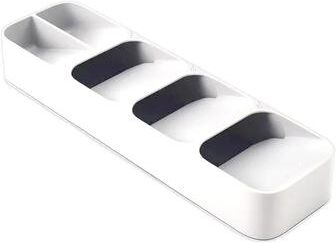
Uplift Essentials Compact Space Saving Cutlery Organizer Multi Compartment Kitchen Drawer Sorting Tray whiteOpening a cluttered kitchen drawer only to be greeted by a tangled, chaotic jumble of loose forks, rolling knives, and buried spoons can bring your meal preparation to an immediate halt. Traditional flat sorting trays slide around easily, scratch...61,97 $*Shipping: 0,00 $Secure redirect to the provider
-
Modern Minimalist Tilt-Out Shoe Cabinet with Heavy Duty Frame and Space-Saving Design(1)Heavy-Duty Steel Frame ConstructionEngineered with premium cold-rolled steel metal framework, this shoestorage cabinet delivers exceptional stability and superior weightcapacity.167,49 $*Shipping: 0,00 $Secure redirect to the provider
-
How can one reduce this equation to a quadratic equation?
To reduce an equation to a quadratic equation, one can use the method of substitution. By substituting a variable for a certain expression in the equation, one can transform the equation into a quadratic form. Another method is completing the square, which involves rearranging the equation to isolate the quadratic term and then adding or subtracting a constant to complete the square. Additionally, one can use the quadratic formula to solve for the roots of the equation, which can help in reducing the equation to a quadratic form. **
-
How can a coordinate equation be converted into a normal equation?
A coordinate equation can be converted into a normal equation by rearranging the terms to isolate the dependent variable on one side of the equation. This involves performing algebraic operations such as addition, subtraction, multiplication, and division to simplify the equation. Once the dependent variable is isolated, the equation is in normal form and can be used to solve for the variable in terms of the independent variables. This process allows for a clearer understanding of the relationship between the variables and makes it easier to analyze and interpret the equation. **
-
What is the second-order difference equation for an inhomogeneous equation?
The second-order difference equation for an inhomogeneous equation is of the form \(y[n] - a_1y[n-1] - a_2y[n-2] = x[n]\), where \(y[n]\) represents the output sequence, \(x[n]\) represents the input sequence, and \(a_1\) and \(a_2\) are constants. This equation describes how the current output value \(y[n]\) is related to the previous two output values \(y[n-1]\) and \(y[n-2]\), as well as the current input value \(x[n]\). The inhomogeneous term \(x[n]\) represents any external influences or disturbances acting on the system. **
-
How can one convert a coordinate equation into a normal equation?
To convert a coordinate equation into a normal equation, you can start by rearranging the equation to isolate the dependent variable on one side. Then, you can simplify the equation by combining like terms and performing any necessary operations. Finally, you can rewrite the equation in standard form, which typically involves expressing the equation in terms of y = mx + b, where m is the slope and b is the y-intercept. **
* All prices are inclusive of VAT and, if applicable, plus shipping costs. The offer information is based on the details provided by the respective shop and is updated through automated processes. Real-time updates do not occur, so deviations can occur in individual cases. ** Note: Parts of this content were created by AI.